
HEMA Shields
Historically informed shields, hand-built for real training and sparring — not generic equipment, and not a fragile display piece either.
A Shieldwright HEMA shield combines historically informed shield design with construction built for modern training. Every one starts from the same shield-making knowledge behind my Historical Reconstruction and Historically Inspired work — heater-shield proportions, real curvature, hand-built plywood-and-linen construction — but where repeated sparring and safe practical use demand a change, I make it, and I say so plainly. A leather-bound edge, a reinforced strap, a durable finish: these are deliberate modern adaptations, not claims about what a medieval shield actually had. I’d rather you own a shield you can genuinely train with and trust the specification on, than one that looks the part but can’t survive real use. Historical evidence remains the starting point here — it’s just no longer the only priority.
HEMA Shields
Real, completed shields, hand-built for training and sparring use.
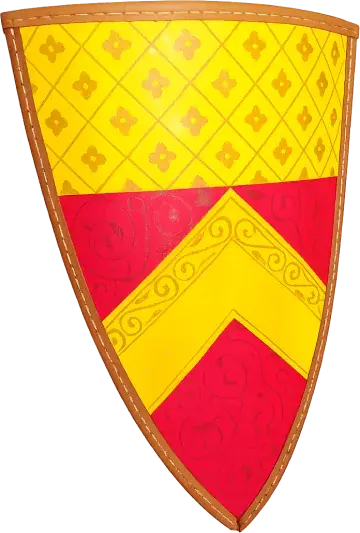
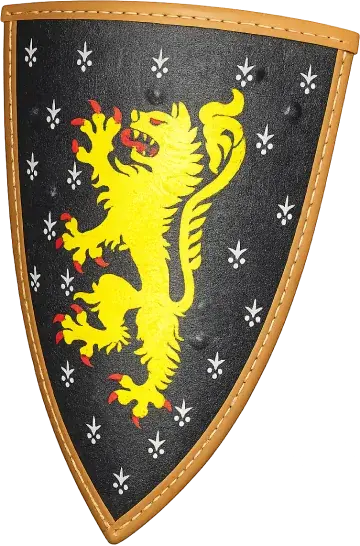
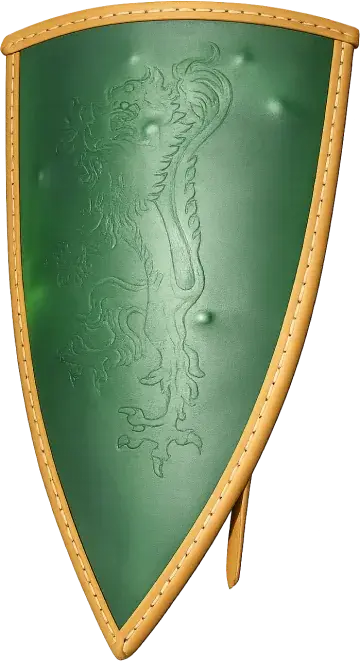
Every shield shown here is a completed, hand-built Shieldwright piece — not a stock render or mockup.
What Is a HEMA Shield?
HEMA — Historical European Martial Arts — covers the practical study and training of historical fighting systems, including shield use. A Shieldwright HEMA shield is my term for a shield built specifically for that training and sparring context: historically informed in its form and proportions, but engineered first for repeated, practical use rather than for display or the strictest reconstruction standard.
Built for Training, Not Just Display
Handling
Weight and balance are considered against how a shield is actually held and moved in sparring, not just how it looks at rest.
Curvature & Coverage
Every shield’s curvature is measured and published; it shapes how the shield deflects and how much of the body it actually covers.
Edge Durability
The edge takes the most repeated contact in training. Where a reinforced or leather-bound edge improves durability, I use it, and I explain why.
Fittings & Straps
Grip, arm strap and shoulder strap are specified for comfortable, secure handling through repeated sessions, not a single afternoon’s display.
Repairability
Training equipment gets used. I build with an eye toward what can realistically be repaired rather than replaced.
Finish for Repeated Use
A finish chosen to hold up to handling and minor knocks, not only to photograph well.
Historical Inspiration, Modern Adaptations
History is the starting point for every Shieldwright HEMA shield, but practical training changes some priorities.
| Feature | Historical Reconstruction | Shieldwright HEMA |
|---|---|---|
| Primary objective | Historical evidence | Practical training performance |
| Materials | Evidence-led | Evidence-informed, modern substitutions allowed |
| Edge treatment | Evidence-led | May use protective leather binding or other practical treatment |
| Fittings | Reconstruction-led | Can be adapted for durability and comfort |
| Finish | Historical reconstruction | Durable practical finish possible |
| Competition use | Not assumed | Intended for HEMA, but organizer rules must be checked |
Why Leather-Bound Edges?
All three HEMA shields I’ve completed so far use a leather-bound edge, and it’s the clearest example of how this category works. Repeated edge contact in training and sparring wears an unprotected edge far faster than years of careful display ever would. A bound edge protects that vulnerable perimeter and is generally easier to maintain and repair over the shield’s working life.
A leather-bound edge here is a deliberate modern durability choice, not evidence that the historical form I’m drawing from is documented to have had one. I keep that distinction clear on every HEMA shield I build.
Curvature and Handling
Curvature isn’t a visual flourish on a Shieldwright shield — it’s a recorded technical specification, because it genuinely changes how a shield performs. More curvature can improve deflection and coverage but changes how the shield sits against the arm and how it handles in movement; a flatter profile handles differently again. The three HEMA shields I’ve built so far span a real range — from the 7.8cm curvature on the Emerald Lion Shield to the deeper 13cm curve on the Piercing Flower Shield — and I haven’t settled on one “ideal” HEMA curvature. If you have a fighting style or intended use in mind, tell me and I’ll help you choose.
Straps, Grip and Gloves
The reverse of a HEMA shield matters as much as the face. Grip, forearm strap and shoulder strap are built for secure, repeated handling, and I take gloved hands into account when specifying strap width and buckle placement. Glove models vary enormously across HEMA practitioners, so I can’t promise universal compatibility — tell me what you train in and I’ll factor it into your shield’s straps.
HEMA Rules and Tournament Compatibility
There is no single universal HEMA shield standard. Clubs and tournaments set their own rules for shield materials, dimensions, edge construction and general safety, and those rules can differ significantly between events.
HEMA equipment rules vary between clubs and tournaments. Check the published dimensions, materials and construction of any shield against your organizer’s current rules before ordering it for competition use.
Need a shield for a particular event or ruleset? Send me the rules before ordering and I can check the specification with you.
Technical Specifications
Every HEMA shield I list publishes its full technical specification alongside its story — dimensions, weight, curvature, core construction, edge treatment, rear fittings and more. If a spec you need isn’t listed on a product page, ask me directly.
Custom HEMA Shields
A HEMA shield can be commissioned the same way as any other Shieldwright piece. Dimensions, heraldry or club colours, and strap setup can all be discussed against your training needs and what the construction can realistically support. See Custom Commission for how the process works, or start a commission directly.
Frequently Asked Questions
What is a HEMA shield?
HEMA — Historical European Martial Arts — covers the practical study and training of historical fighting systems, including shield use. A Shieldwright HEMA shield is built specifically for that training and sparring context: historically informed in its form and proportions, but engineered first for repeated, practical use rather than for display or the strictest reconstruction standard.
Can I use a Shieldwright HEMA shield in tournaments?
Only if it meets your specific event’s rules — there is no single universal HEMA shield standard. Clubs and tournaments set their own requirements for materials, dimensions and edge construction. Check your organizer’s current rules against a shield’s published specification before ordering for competition, or send me the rules directly and I’ll check with you.
Are Shieldwright HEMA shields historically accurate?
They’re historically informed rather than historical reconstructions. Shape, proportion and curvature draw on real shield-making knowledge, but where training performance requires it — most visibly in edge treatment — I make deliberate modern adaptations and say so plainly. If strict evidence-led accuracy is what you actually want, that’s my Historical Reconstruction category instead.
Why do some HEMA shields have leather-bound edges?
Repeated contact during training and sparring wears an unprotected edge faster than display use ever would. A leather-bound edge protects that vulnerable perimeter and is generally easier to maintain and repair over time. It’s a deliberate modern durability choice on these shields, not a claim that the historical form I’m working from is documented to have had one.
Can I order a custom HEMA shield?
Yes — dimensions, heraldry or club colours, and strap setup can all be discussed against your training needs. See Custom Commission for how the process works, or start a commission directly.
How much does a HEMA shield weigh?
It depends on the specific shield and its construction — see each product’s published technical specification for its exact weight, or ask me directly about a shield I’m still building.
What curvature should a HEMA shield have?
There’s no single correct number — curvature affects coverage, deflection and handling differently depending on fighting style and intended use. I record and publish curvature on every shield I build; ask me if you want help matching curvature to your own training.
Are the straps compatible with HEMA gloves?
Strap and grip layouts are designed with gloved hands in mind, but glove models vary widely and I can’t promise universal compatibility. Tell me which gloves you train in and I’ll take that into account.
Can a damaged HEMA shield be repaired?
In most cases, yes. Edge damage, strap wear and minor face damage can often be addressed — tell me what’s happened and I’ll assess whether a repair is practical for your particular shield.
What weapons can the shield be used with?
Shield use varies significantly by discipline, club rules and your own training context. Tell me your intended weapon and discipline when you enquire, and I can flag anything relevant about a shield’s construction for that use.
What is the difference between a HEMA shield and a historical reconstruction?
A Historical Reconstruction is built with historical evidence as the priority; a HEMA shield starts from that same historical knowledge but is built for practical, repeated training use — which sometimes means a deliberate, clearly stated modern adaptation. See Historical Reconstruction for the evidence-first category.
Do you make HEMA bucklers?
Not yet — bucklers have their own strict competition requirements around diameter, grip and material, and I’m treating that as a separate project rather than a scaled-down heater shield. Heater shields and related early forms are my current HEMA focus.