Historically Inspired Series
William Marshal — The Marshal Lion
England · c. 1199–1219
Per pale Or and Vert, a lion rampant Gules
Obiit Willelmus Marescallus, miles incomparabilis.
William Marshal, the incomparable knight, has died.
Who He Was
William Marshal (c. 1147–1219) made his name on the tournament circuit and served Henry the Young King, Henry II, Richard I and John. King John made him Earl of Pembroke in 1199, and in 1216 he became regent for the young Henry III. He died on 14 May 1219 and was buried in the Temple Church, London.
No shield known to have belonged to him survives. The arms traditionally attributed to him, per pale Or and Vert, a lion rampant Gules, were painted by Matthew Paris within a generation of his death, the shield turned upside down beside the notice of it.
The Evidence
What Is Proven, and What Is My Reconstruction
This interactive shield is a historically informed interpretation of mine, based on the heraldic evidence associated with William Marshal and comparative evidence from surviving medieval shields. Its shape, construction and rear fittings are documented reconstruction choices, not verified details of Marshal's own equipment.
In plain words: no shield of his survives. Only what is marked as evidence comes from the sources; everything else, which is most of the build, is my interpretation.
What the evidence shows
- Arms
- Per pale Or and Vert, a lion rampant Gules: gold on the dexter half (the bearer's right), green on the sinister, as Matthew Paris drew them c.1240–1255. The pale half of his drawing is read as gold.
What is my reconstruction
- Lion
- A rampant lion with a single curled tail from my heraldry set, painted red, facing dexter. Matthew Paris also drew a single tail; the flame-like tufts of the mane and limbs are my artistic choice.
- Shape and size
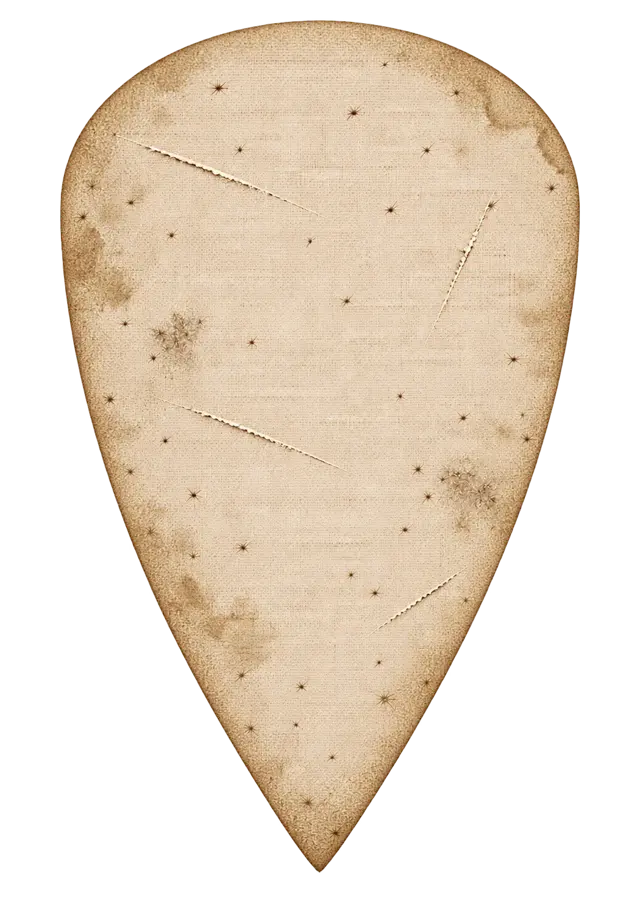
- Tall Flat-Top Heater, 58 × 85.4 cm, with the workshop's standard bow. Marshal's own shield does not survive; Seedorf (87.3 × 65.8 cm, c.1200–1220), the nearest surviving shield of his time, is a little longer and wider.
- Core
- Linden planks, 10–12 mm thick, glued edge to edge with animal glue and shaped to the curve. Shields of his time were built from glued boards (Seedorf: alder); linden was a shield wood of the thirteenth century (Konrad von Thüringen, Marburg).
- Front
- Two layers of linen glued over the face and turned round the edge onto the back, standing in for the parchment of surviving shields; gesso, paint and a beeswax finish.
- Back
- Two layers of linen dyed burgundy. A workshop colour choice: the reverse of his shield is not recorded.
- Fittings
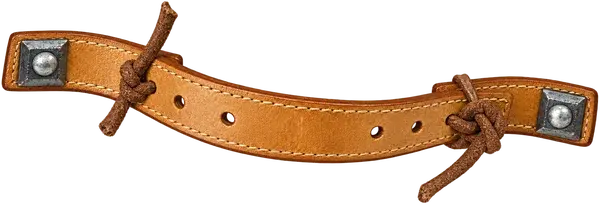
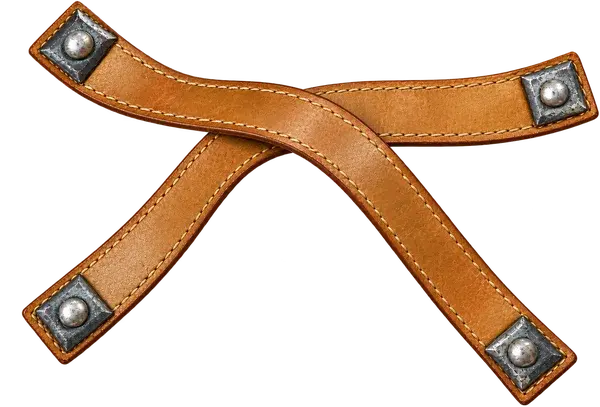
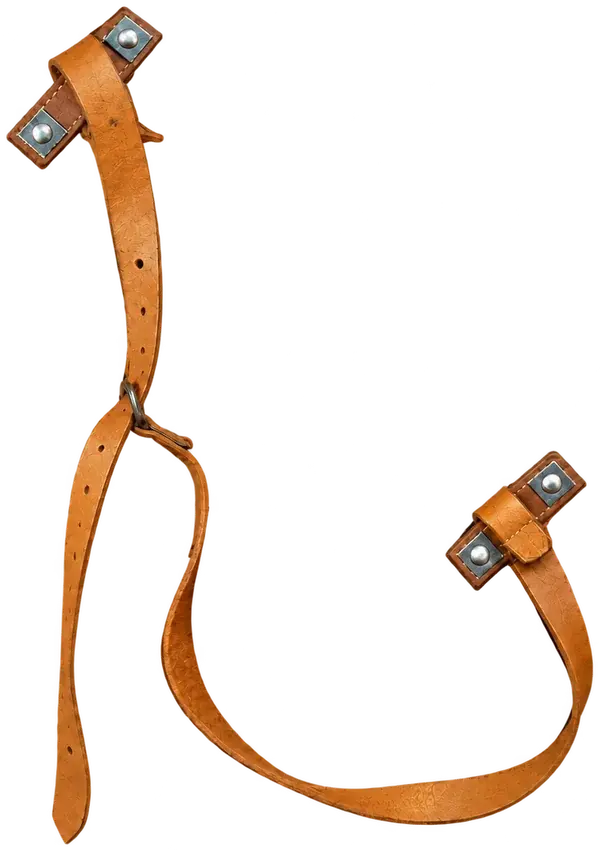
- Leather enarmes for the left arm (crossed forearm straps and a hand grip), a leather-covered arm pad and an adjustable guige on two riveted mounts. Enarmes and a neck strap survive on Real Armería D 59; their layout here is mine.
Made as an Artefact
I paint and weather every shield of the series by hand, so each one differs a little from the preview and from every other. The preview shows the design; the shield you receive is its own.
Read the full research: William Marshal: Reconstructing the Shield of the Greatest Knight →