Historically Inspired Series
William Longespée — The Six Lions of Salisbury
England · c. 1210–1226
Azure, six lioncels rampant Or, three, two and one
Flos comitum Willelmus obit, stirps regia; longus ensis vaginam coepit habere brevem.
William, flower of earls, of royal stock, has died; the long sword has come to a short scabbard.
Who He Was
William Longespée, “Long Sword”, was an illegitimate son of Henry II and half-brother of Richard I and John. Through his marriage to Ela, heiress of Salisbury, he became Earl of Salisbury. He commanded the right wing of the allied army at Bouvines in 1214, where he was captured, fought for the young Henry III at Lincoln in 1217, and died on 7 March 1226, the first to be buried in the new cathedral at Salisbury.
No shield known to have belonged to him survives. His great seal shows him riding with a shield of six lions, three, two and one, and his effigy at Salisbury carries the same lions, with blue paint and gilding recorded on it in 1835.
The Evidence
What Is Proven, and What Is My Reconstruction
This interactive shield is a historically informed interpretation of mine. The six gold lions on blue come from the earl's great seal and his painted effigy at Salisbury; the drawing of the lions, the weathered paint, the shape, construction and rear fittings are documented reconstruction choices, not recovered details of his own shield.
In plain words: no shield of his survives. Only what is marked as evidence comes from the sources; everything else, which is most of the build, is my interpretation.
What the evidence shows
- Arms
- Six gold lions on blue, three, two and one: the lions and their arrangement on his great seal (engraved by Bowles, 1835) and carved on his effigy; the blue and gold recorded in the paint on the effigy in 1835.
What is my reconstruction
- Lions
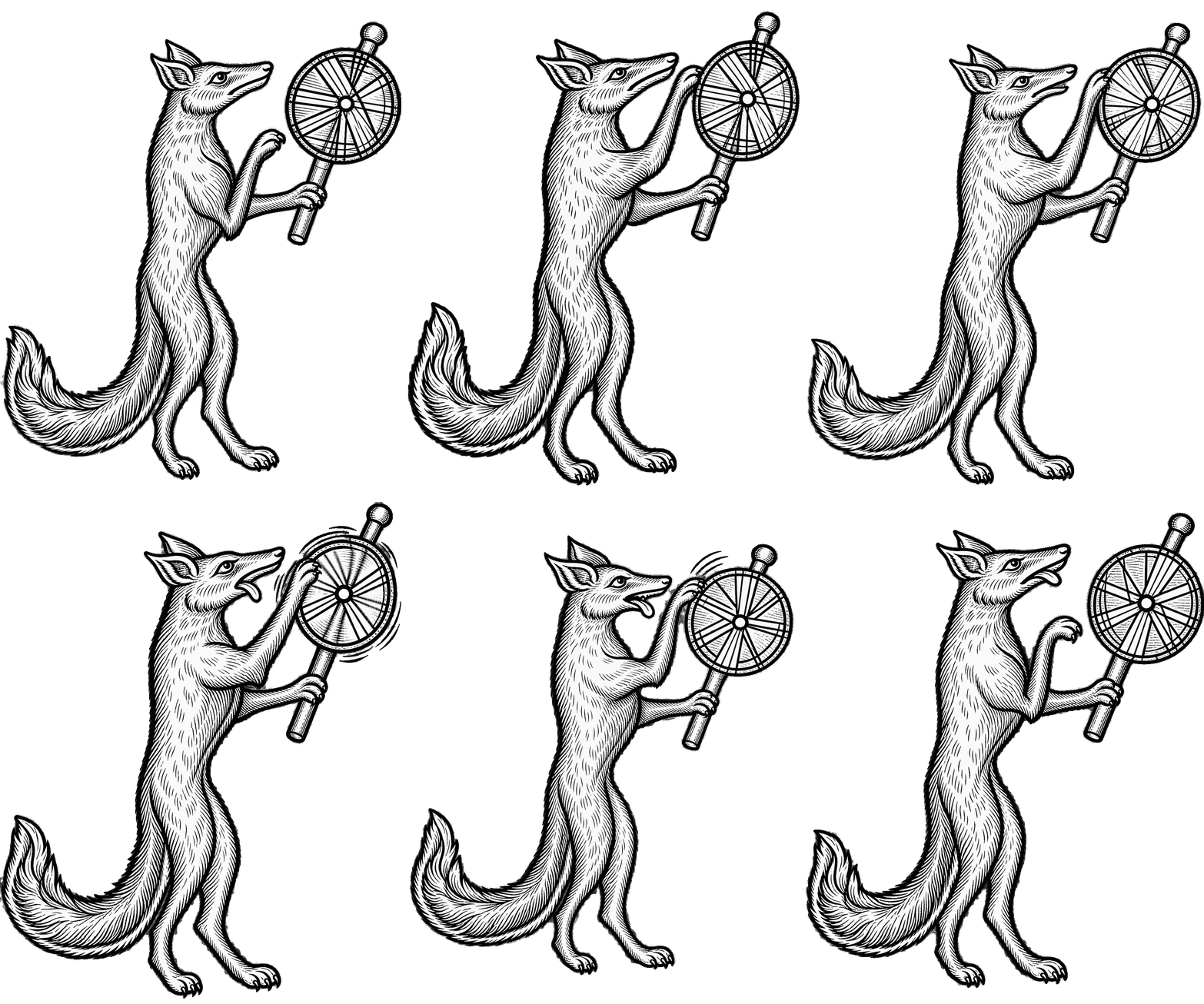
- My painting: the lions stride with a forepaw raised, where the seal and the effigy show them upright (rampant), and their red tongues and claws are an artistic addition.
- Field
- Blue for azure. Whether the blue recorded on the effigy is its original paint is not established, and the exact blue of any shield of his is not known.
- Shape and size
- Tall Flat-Top Heater, 58 × 85.4 cm, with the workshop's standard bow. The effigy's shield is long, straight-topped and pointed, covering shoulder to knee; the size is my choice, since no shield of his survives.
- Core
- Linden planks, 10–12 mm thick, glued edge to edge with animal glue and shaped to the curve. Shields of his time were built from glued boards (Seedorf, c.1200–1220: alder); linden was a shield wood of the thirteenth century (Konrad von Thüringen, Marburg).
- Front
- Two layers of linen glued over the face and turned round the edge onto the back, standing in for the parchment of surviving shields; gesso, paint and a beeswax finish.
- Back
- Two layers of linen dyed burgundy. A workshop colour choice, after the crimson lining recorded on the effigy's surcoat; the reverse of his shield is not recorded.
- Fittings
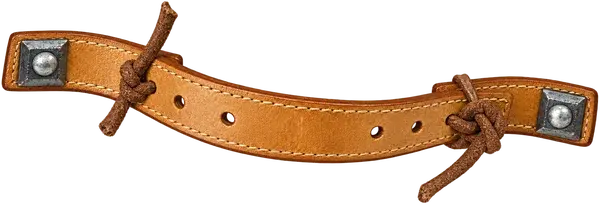
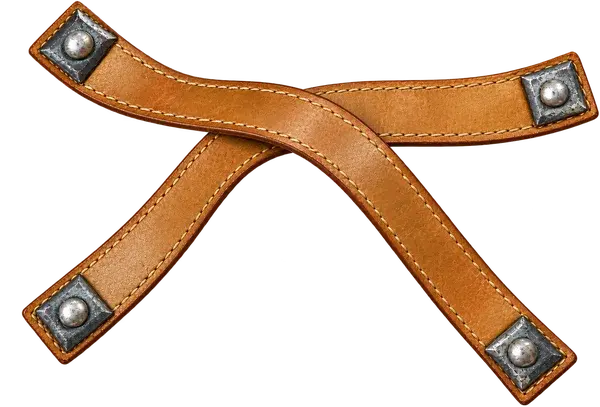
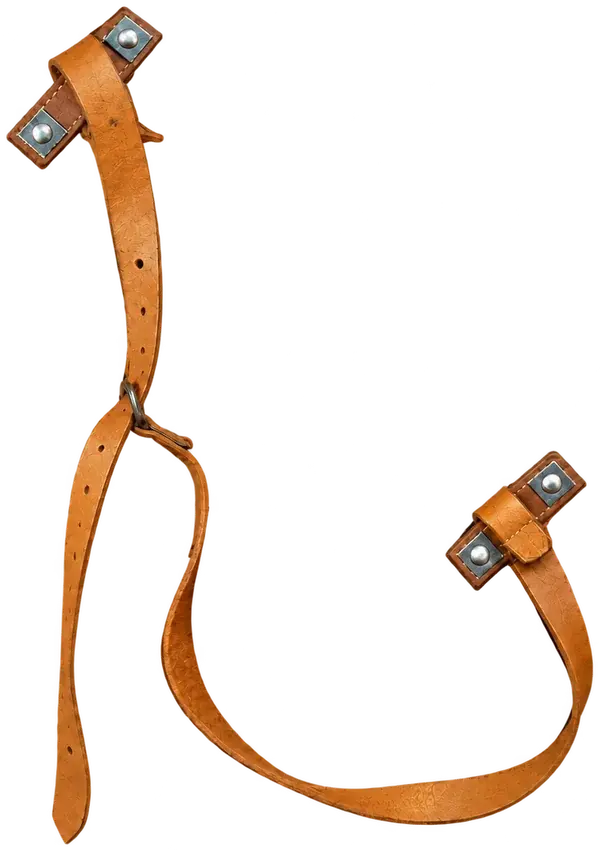
- Leather enarmes for the left arm (crossed forearm straps and a hand grip), a leather-covered arm pad and an adjustable guige on two riveted mounts. Neither the seal nor the effigy shows the reverse; their layout is mine.
Made as an Artefact
I paint and weather every shield of the series by hand, so each one differs a little from the preview and from every other. The preview shows the design; the shield you receive is its own.